Long Island, NY · Nassau and Suffolk counties
Full Structural Restoration in Long Island, NYStructural Moisture Removal & Structural Water Damage Repair
Full Structural Restoration in Long Island covers structural water damage repair, foundation water restoration and wall framing drying services.
Answered 24/7
Understanding Full Structural Restoration in Long Island, New York
In Long Island, hidden damage to the frame after a water incident can make a home unsafe. Local restoration professionals in Long Island manage the project by conducting a detailed structural damage assessment, noting every affected joist, stud, and foundation point.
In Long Island, structural repairs often follow plumbing failures or storms. Nearby places like Ronkonkoma, Central Islip and Oakdale also rely on these expert services to maintain property integrity. The local restoration professionals prioritize thorough drying before any reconstruction begins.
Comprehensive Full Structural Restoration Offerings in Long Island
Structural Moisture Removal
Water-damaged studs and beams often need targeted repair. The professionals dry what can be saved and replace wood that has rotted or swollen.
Structural Water Damage Repair
Structural water damage repair in Long Island evaluates framing members for swelling or rot. Studs, joists and beams are repaired so they carry their loads again.
Structural Integrity Assessment
A structural integrity assessment prioritizes safety, examining the physical state of materials. The inspection looks for indicators of decay, mold, and compromised wood to decide what structural elements can be restored through drying and which must be replaced.
Load-Bearing Wall Restoration
Repairs return the wall to its original load capacity. Experts inspect for twisting or bowing in structural members. Repair can include adding steel brackets or replacing frame sections.
Foundation Water Restoration
Concrete holds water and releases it slowly. Experts check for moisture and mold in slabs and foundation walls and dry them so the problem does not return.
When to Consider Full Structural Restoration in Long Island
Doors and Windows Sticking
Doors and windows that stick or won't close properly often mean the structural wood framing has swollen.
Bowed or Warped Walls
Visible bowing or warping indicates water has compromised the structural integrity of wall framing, requiring immediate assessment.
Ceiling Sag or Beam Deflection
A sagging ceiling or visibly bending beam is a clear warning of structural integrity restoration urgency.
Cracks in Load-Bearing Walls
New or expanding cracks in foundation walls or load-bearing walls signal serious structural stress from moisture saturation.
How Full Structural Restoration Works in Long Island
Step 1: Detailed Moisture Mapping
The specialists use thermal imaging and moisture meters to create a precise map of all wet structural components needing drying.
Step 2: Aggressive Structural Drying
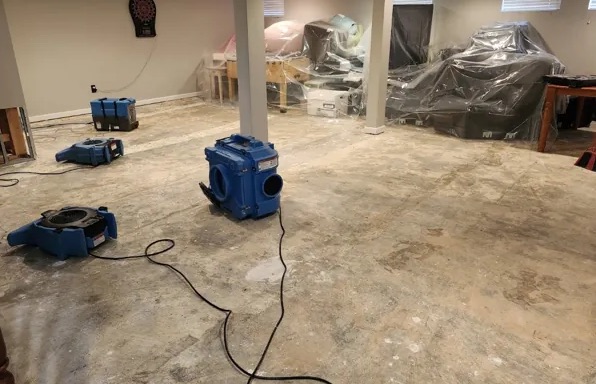
An array of desiccant and LGR dehumidifiers is deployed for structural drying and dehumidification of enclosed spaces like wall and floor cavities.
Step 3: Load-Bearing Component Evaluation
Each load-bearing wall, beam, and column is individually evaluated for strength loss to guide specific load-bearing wall restoration work.
Step 4: Repair and Reinforcement Execution
Necessary repairs, from foundation water restoration to sistering joists, are completed using IICRC-standard methods to finalize the structural restoration.
What Leads to Structural Damage in Long Island Homes?
Sewage Backup or Clean Water Infiltration
Sewer backups or sump pump failures flood basements, damaging structural posts and foundational elements.
Firefighting Water After a Blaze
The substantial water used to extinguish fires soaks structural members, demanding post-fire structural drying methods.
Poor Drainage and Grading Issues
Improper yard grading directs water toward the foundation, a common cause of structural moisture removal projects.
Roof Leaks Over Extended Periods
Chronic roof leaks allow water to drip into attics and walls, slowly degrading structural framing integrity.
Full Structural Restoration in Long Island: Houses and Commercial Buildings
Residential Full Structural Restoration
In homes, structural water damage repair focuses on restoring the safety of living spaces. The pros address sagging floors, compromised wall studs, and wet attic framing to protect your family and property value.
Commercial Full Structural Restoration
For businesses, foundation and load-bearing wall repairs keep the building open. The specialists secure the building and keep people safe while downtime stays short. They document all damage thoroughly for commercial insurance claims.
The Limits of DIY for Full Structural Restoration in Long Island
If it is safe to access the electrical panel, turning off power to the affected area can prevent shock hazards. Do not attempt to shore up or support sagging beams yourself; that is a task for the specialists.
Estimating Full Structural Restoration Expenses in Long Island
The price for full structural restoration in Long Island reflects the scale of the damage and the materials needing repair. Structural water damage repair requires specialized drying equipment and skilled labor.
Extent of Structural Damage
The scale of damage to framing, foundation, or load-bearing elements dictates the materials and labor required for complete structural integrity restoration.
Contamination Level
Post-flood structural repair for category 2 or 3 water involves additional safety protocols and cleaning, increasing the overall restoration effort.
Required Drying Time
Structural drying and dehumidification processes must run until materials reach a specific moisture content, affecting equipment rental duration and energy use.
Does Insurance Cover Full Structural Restoration?
Whether insurance covers structural drying and dehumidification hinges on the homeowner's policy. The professionals provide detailed documentation of the structural damage assessment. Homeowners must confirm specific coverage for foundation restoration services directly with their insurance company.
Selecting Local Professionals in Long Island for Your Structural Restoration
Documentation for Insurance
The professionals provide detailed logs and photos of the structural damage assessment and drying progress for your insurance claim file.
24/7 Emergency Response
Fast action stops water from weakening load-bearing parts and the foundation over time.
Foundation Restoration Focus
Attention to foundation water restoration helps prevent long-term settlement issues and preserves the stability of the entire structure above.
Emergency Structural Damage Response in Long Island
After a flood, structural drying should start as soon as possible to save the framing. Call the pros at (516) 475-5895 for emergency drying in Long Island.
Call Now (516) 475-5895Full Structural Restoration Near Long Island: Areas Served
When water reaches a building's frame in Long Island, it needs structural drying and dehumidifying. The professionals provide these specialized services to the community and nearby areas including Ronkonkoma, Central Islip and Oakdale.
Frequently Asked Questions About Full Structural Restoration
What is the goal of post-flood structural repair?
Contaminated water is removed, the structure is dried and any damaged framing is repaired or replaced.
What equipment is used for structural drying methods?
Standard tools are industrial dehumidifiers, air movers, wall cavity drying systems and thermal cameras.
What are signs of hidden structural water damage?
Warped floors, sticking doors, cracks emanating from corners, and a musty smell can indicate moisture within wall cavities or floor systems, requiring investigation by the professionals.
Why is foundation water restoration urgent?
Saturated foundation materials can erode, shift, or lose strength, leading to settlement cracks and instability in the entire structure above. Fast drying keeps repairs smaller.
What is the first step after discovering structural damage?
Call for emergency water extraction first, then book a structural assessment to plan the repairs.